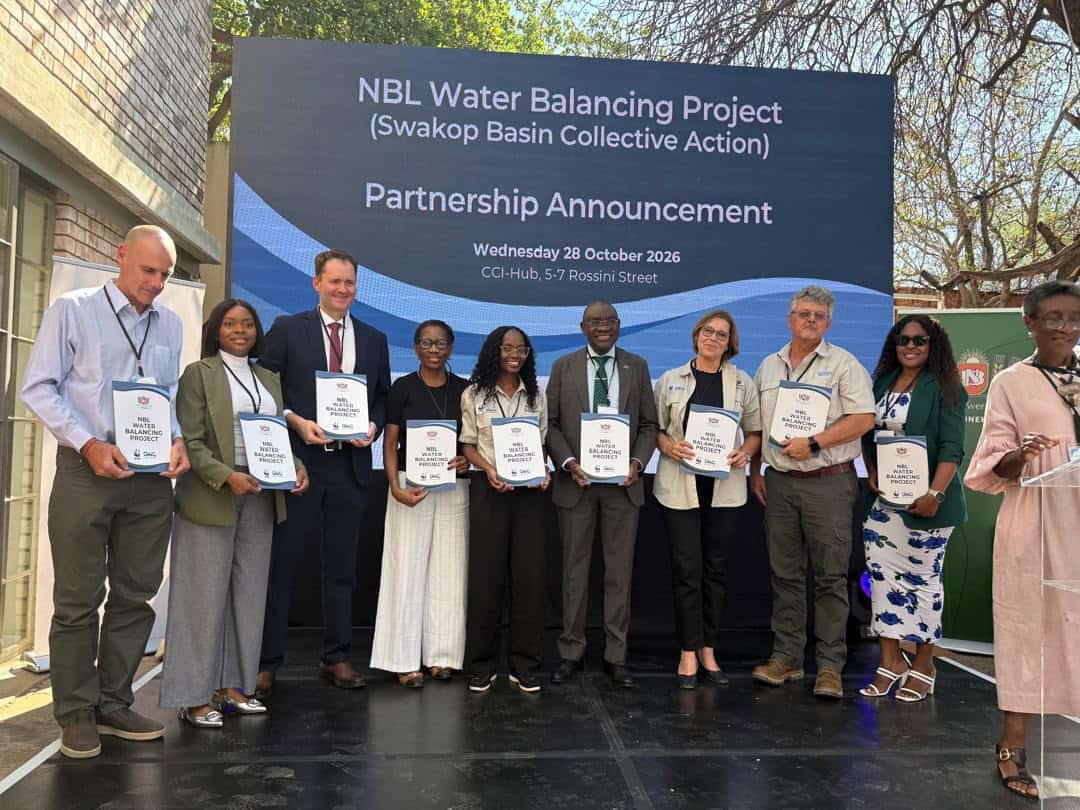
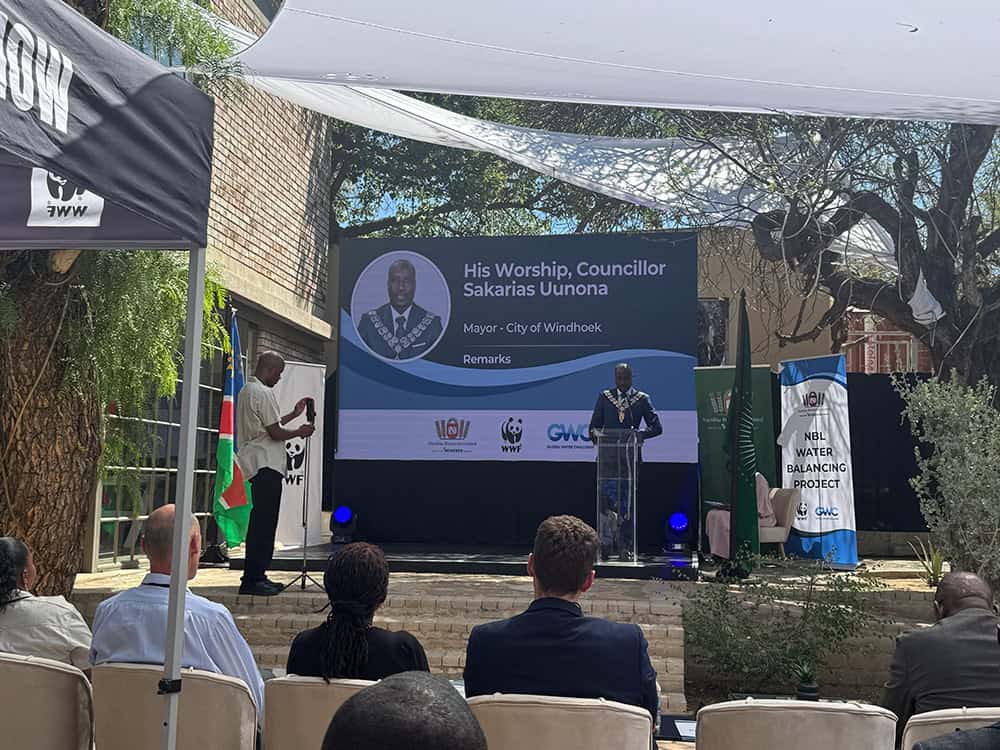
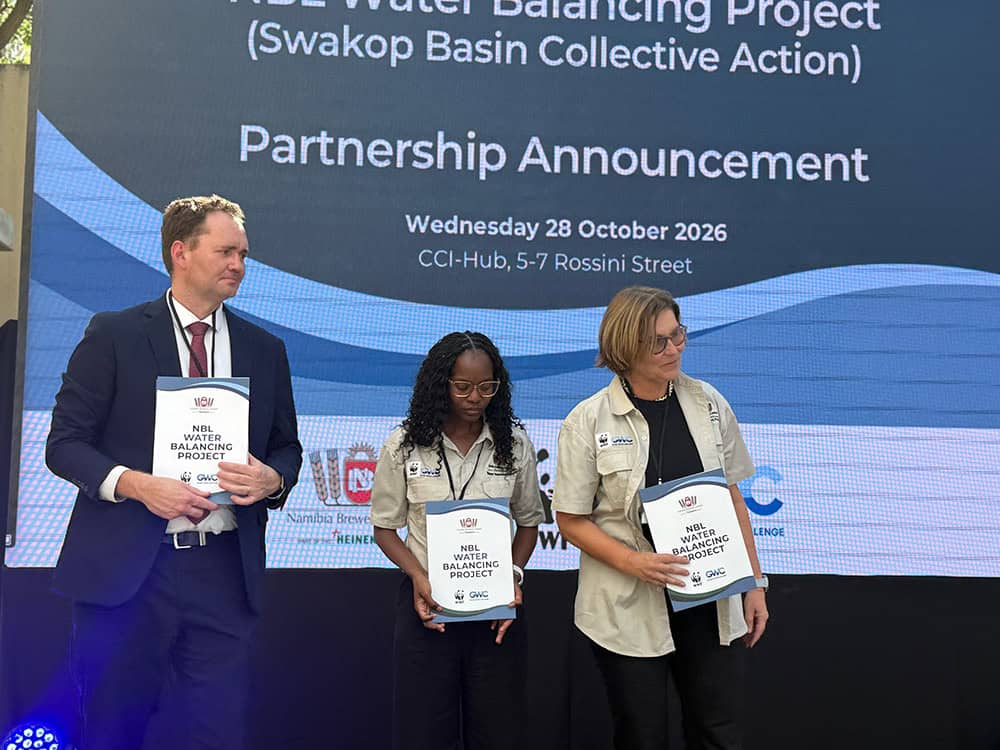
Windhoek, Namibia | 28 October 2026 – Namibia Breweries Limited (NBL), World Wildlife Fund (WWF Namibia) and the Global Water Challenge (GWC) today announced the signing of a Memorandum of Agreement (MoA) to implement the Swakop Basin Collective Action Project, also known as the NBL Water Balancing Project. The five-year initiative brings together government, civil society and the private sector to address shared water challenges and strengthen water security and climate resilience in the Swakop River Basin.
Backed by an investment of approximately N$13 million, the five-year project (2026-2030) will be implemented by WWF Namibia in partnership with Global Water Challenge (GWC) and the City of Windhoek. Drawing on the City of Windhoek’s recognised expertise in water management and reclamation, the partnership will support efforts to strengthen water security and improve the sustainable management of the Swakop River Basin. The initiative builds on NBL’s ongoing commitment to responsible water stewardship. In 2025, the company improved its water efficiency to 3.56 litres of water for every litre of product produced and is working towards reducing this to 2.4 litres by 2030 under its Brew a Better Namibia 2030 strategy. Recognising that long-term water security depends on healthy catchments and collective action, NBL is investing beyond its own operations to support the resilience of communities, ecosystems and the economy.
Waldemar von Lieres, Managing Director, Namibia Breweries Limited, said: “Our ambition is to lead by example in water stewardship, inside our brewery and beyond. Since 2015, we have invested more than N$35 million in reducing our own water footprint and have increased our water efficiency by 30% since 2024. Our N$13 million commitment over five years to the Water Balancing Project extends that investment into the shared basin on which we all depend. Working with our partners, we aim to strengthen water security for communities, businesses and ecosystem, helping build a water-resilient future for Namibia.”
NBL is part of HEINEKEN Company, and water stewardship is a core part of HEINEKEN’s Brew a Better World strategy, which aims to balance the water used in its products in water-stressed areas. This project supports NBL’s water balancing ambitions and demonstrates the value of collective action in addressing shared water challenges. The Swakop River Basin is a critical water source for communities, agriculture, industry and towns across central Namibia. Growing demand, recurring droughts and climate change are placing increasing pressure on these limited water resources. Through collaboration between government, local authorities, civil society, businesses and water users, the project aims to strengthen water security and support the sustainable management of the basin for the benefit of current and future generations.
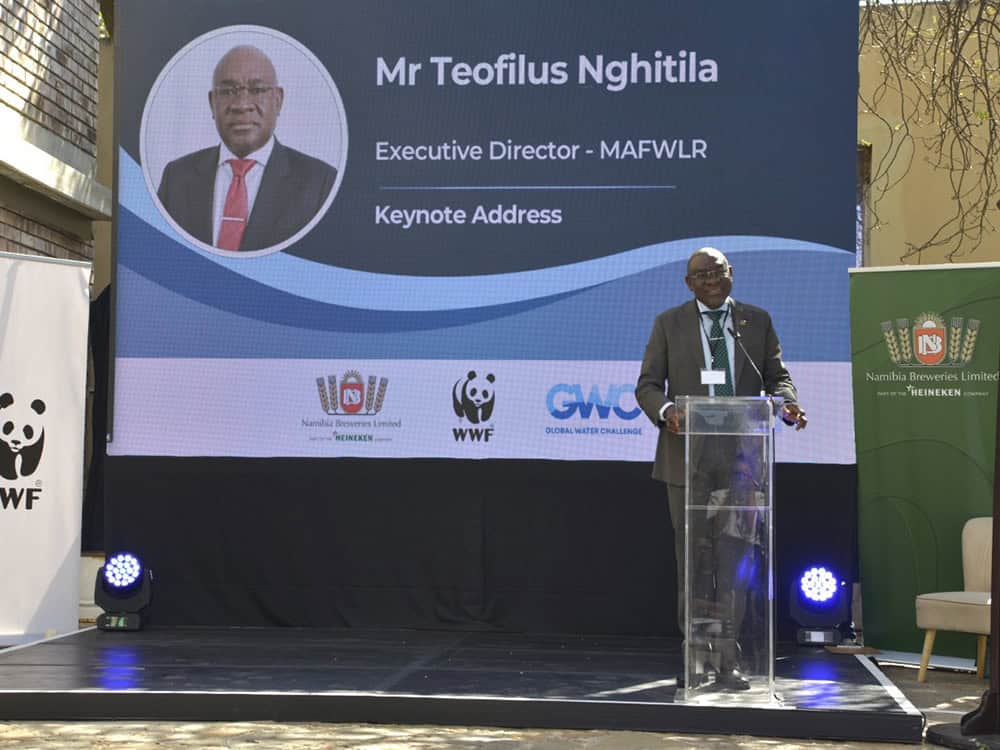
The project also supports ongoing government efforts to strengthen integrated water resource management and build resilience to climate change through collaborative approaches that benefit both people and nature. Mr.Teofilus Nghitila, Executive Director, Ministry of Agriculture, Fisheries, Water and Land Reform, said: “The Government of Namibia remains committed to strengthening water security and climate resilience through sustainable water resource management. Initiatives such as the Swakop Basin Collective Action Project demonstrate the value of partnerships in addressing shared water challenges. We commend NBL, WWF Namibia and Global Water Challenge for working together to support water security, healthy ecosystems and long-term resilience for communities and businesses.”
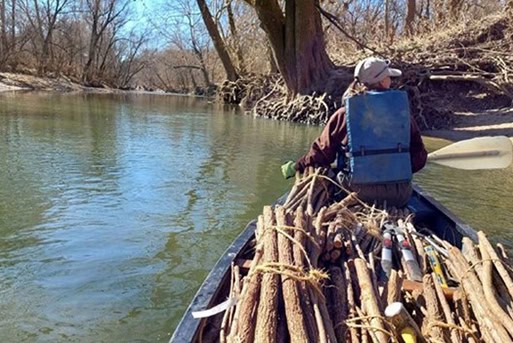
By 2030, the project is expected to deliver approximately 386 million litres of annual water benefits through interventions in the upper Swakop catchment. These include managed aquifer recharge and other nature-based solutions to improve groundwater recharge and water quality, the removal of invasive alien plants from riverbeds, and strengthened water governance through the development of a Sub-Basin Water Allocation and Abstraction Plan. The project will also restore or improve the management of 153 hectares of land. The annual water benefit is equivalent to more than 150 Olympic-sized swimming pools.
As a global leader in collective water action, GWC works with partners around the world to develop practical solutions to shared water challenges and create measurable, long-term impact. Malick Keita, Senior Water Stewardship Director at the Global Water Challenge, said: “ Water security is a shared responsibility that requires collective action. Building on our existing collaboration with WWF Namibia and Coca-Cola in the Swakop Basin, we are proud to welcome Namibia Breweries Limited (part of the HEINEKEN group), as a key partner in expanding these efforts. This initiative demonstrates how strong private-sector commitment, combined with local expertise and public-sector collaboration, can translate into meaningful, lasting benefits for water resources, ecosystems, and communities“
WWF Namibia noted that long-term water security depends on healthy ecosystems and effective stewardship of the natural systems that sustain water resources. Dr Juliane Zeidler, WWF Namibia Country Director, said: “Water touches every aspect of our lives, from the health of our ecosystems to the wellbeing of our communities and economy. What makes this partnership so important is that it brings together organisations with different strengths but a shared commitment to protecting the resources on which we all depend. By investing in the health of the basin today, we have an opportunity to address water challenges at their source and create lasting benefits for people and nature for generations to come.”
At a time when water scarcity and climate change are increasing pressure on Namibia’s shared water resources, the Swakop Basin Collective Action Project demonstrates how collaboration can turn shared challenges into shared solutions. Through investment in nature-based solutions, stronger governance and collective stewardship, the partnership aims to help secure a more water-resilient future for people, nature and the economy.