Global Water Challenge and Cargill Expand Partnership to Four Additional Countries

New and expanded initiatives will work to mobilize safe water access and improve watershed health and water-efficient agriculture

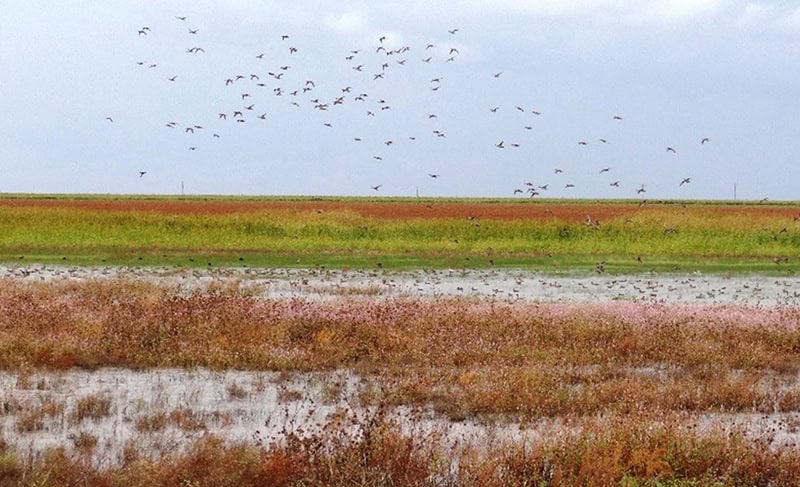
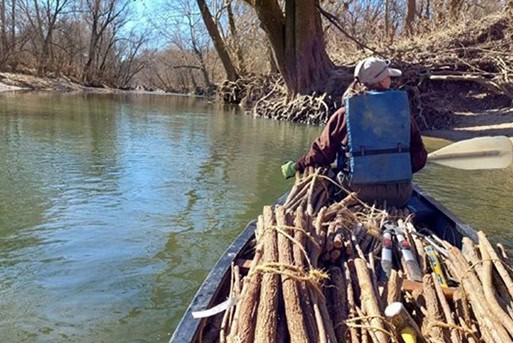
Through Cargill Currents, landowners in Texas received support to protect and restore playas. These shallow wetlands play a vital role in replenishing groundwater and maintaining watershed health

WASHINGTON, D.C. (September 1, 2026) – Global Water Challenge (GWC) and Cargill announced today the expansion of their Cargill Currents partnership into Bolivia, Colombia, Costa Rica and Türkiye. Launched by GWC and Cargill in 2021, Cargill Currents is a joint initiative that works in partnership with communities, governments and local organizations to help address the water challenges facing each region. As part of a global partnership, these new country activities join ongoing programming underway in Brazil, Ghana, Côte d’Ivoire, and North America. Planned activities include improving access to safe water and sanitation, repairing water systems and supporting their long-term maintenance, promoting more efficient water use in farming, and restoring and monitoring watersheds.  

Since the partnership’s launch, Cargill Currents has supported programming across five continents, with outcomes that include improving water access, sanitation and hygiene (WASH) for nearly 200,000 people in Brazil and West Africa. Across North America, the partnership has supported regenerative agriculture across nearly 42,000 hectares, restored more than 1,700 hectares of forests, wetlands, and grasslands, and planted more than 283,000 trees.

“Water is essential to people and agriculture, which makes it essential to our business,” said Pete Dahm, Senior Director, Sustainability and Global Water Lead at Cargill. “We’re excited to further expand our partnership with GWC through this next phase of Cargill Currents and build on the strong progress we’ve made together over the past five years.”

New Cargill Currents country activities include the following expected outcomes:

  • Bolivia: Improved access to safe water and sanitation for more than 1,000 households – representing more than 3,500 people – while supporting watershed conservation and local management of water systems.
  • Colombia: Improved reliable drinking water access for approximately 1,000 people across five rural communities through aqueduct rehabilitation, water treatment solutions, and strengthened community water governance.
  • Costa Rica: Improved long-term water security for 10,000 people by modernizing aging water infrastructure. These improvements will help reduce water losses frequently caused by leaks and other inefficiencies in aging pipes and infrastructure. The partnership will also strengthen the capacity of local utilities to manage and maintain their systems.
  • Türkiye: Implementation of sustainable agriculture practices for 125 farmers around Lake İznik, with training in precision irrigation and regenerative practices designed to use water more efficiently across 500 hectares. The project is expected to conserve an estimated 374 million liters of water annually.


Expanded Cargill Currents country initiatives include the following expected outcomes:

  • Brazil: Improved WASH services for nearly 38,000 people across 39 communities and 61 schools in Bahia and Pará.
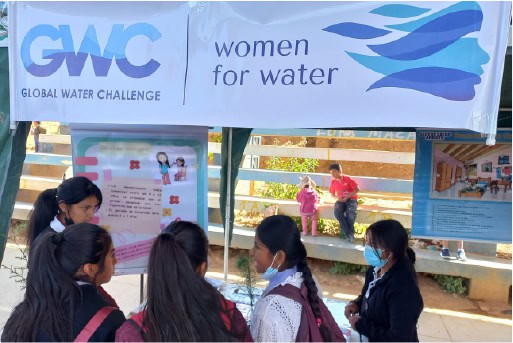
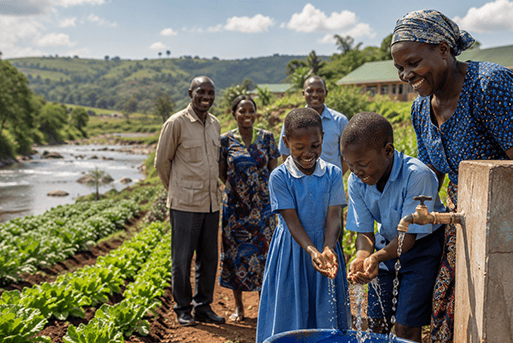
  • Côte d’Ivoire and Ghana: Improved WASH services and programs focused on strengthening women’s livelihoods and community water management for approximately 55,000 people across twelve cocoa-growing communities (six in each country).
  • North America: Watershed mapping and assessment for approximately 170,000 hectares of estuarine and marine ecosystems in California’s San Francisco Bay-Delta to identify erosion risks, habitat conditions, and climate vulnerabilities. The findings will inform projects, such as planting native vegetation and restoring wetlands, to help reduce erosion and protect nearby coastal communities.


Water security looks different in every community, and the solutions must be designed accordingly. Our Cargill Currents partnership brings together the resources, expertise, and local leadership needed to respond to those differences – from strengthening water systems and expanding access to safe water and sanitation, to helping farmers use water more efficiently and protecting the watersheds communities depend on. As we reflect after World Water Week, expanding this work into four new countries is an important step in building lasting water security where it is needed most.” said Monica Ellis, CEO of Global Water Challenge.

This work supports Cargill’s ambition of enabling a water positive impact across its operations, supply chains and communities by 2030.

Learn more about how Cargill works to improve water access, availability and quality around the world.
Europe, Central
Asia and the
Middle East

For 20+ years, GWC’s work across Europe, Central Asia, and the Middle East has addressed some of the world’s most complex and water-scarce environments.

Working with leading corporate and government partners, GWC-led platforms deliver integrated water stewardship programs that improve WASH access, restore watersheds, and promote sustainable agriculture in 17 countries in the region.

Project types

WASH Access

Nature-Based Solutions

Climate Resilience

Utility Strengthening

Sustainable Agriculture

Empowerment

Impact to date across 17 countries

41

FAO sub-basins with improved water security

382K+

People reached with WASH programs

3BL+

Liters of water replenished (2025)

4

Water utilities with improved capacity

37.4K+

Women empowered

55K+

Hectares restored or under improved management

20.2K+

Trees planted

1.6K+

Farmers trained in sustainable agriculture

Regional platforms

Asia Pacific

GWC’s Asia Pacific portfolio addresses water security across South Asia’s most vulnerable regions.

Across Asia, our programs with leading partners, including Gap Inc., The Coca-Cola Company, the United Nations, and other premier brands, support integrated watershed management, water access in schools and communities, agricultural water efficiency, and community and women’s empowerment.

In India and Pakistan, GWC mobilizes positive impact in stressed basins, bringing together local and international partners to build long-term water resilience.

Project types

WASH Access

Nature-Based Solutions

Climate Resilience

Utility Strengthening

Sustainable Agriculture

Empowerment

Impact to date across 7 countries

19

FAO sub-basins with improved water security

604K+

People reached with WASH programs

2.1BL+

Liters of water replenished (2025)

13

Water utilities with improved capacity

9.6K+

Women empowered

18.6K+

Hectares restored or under improved management

9K+

Trees planted

3.6K+

Farmers trained in sustainable agriculture

Regional platforms

Latin America
and the Caribbean

For 20+ years, GWC has provided deep and pioneering water stewardship expertise across Latin America and the Caribbean through partnerships with communities, local NGOs, and multinational companies.

Today, GWC’s best practices mobilize water access and improve water security region wide.

With leading partners, including Coca-Cola Latin America and its bottlersCargill, and Grundfos, GWC advances integrated watershed restoration, urban utility strengthening, sustainable agriculture, and WASH solutions, targeting the region’s most stressed basins with a goal to benefit 2.3 MM+ people by 2030.

Project types

WASH Access

Nature-Based Solutions

Climate Resilience

Utility Strengthening

Sustainable Agriculture

Empowerment

Impact to date across 17 countries

68

FAO sub-basins with improved water security

1.7MM+

People reached with WASH programs

16.1BL+

Liters of water replenished (2025)

35

Water utilities with improved capacity

251K+

Women empowered

16K+

Hectares restored or under improved management

322K+

Trees planted

1.1K+

Farmers trained
in sustainable agriculture

Regional platforms

Africa

For 20+ years, GWC has advanced water access and security across Africa through pioneering collective action platforms, including the pathbreaking Replenish Africa Initiative (RAIN) and the Water and Development Alliance (WADA), improving water access and security for thousands of communities and millions of people.

Today, the Africa Water Stewardship Initiative (AWSI) platform, with The Coca-Cola Company and its bottling system, and our Cargill Currents platform tackle Africa’s complex water security challenges across 41 countries through watershed restoration, water access, sustainable agriculture, systems strengthening, and community-led governance.

Project types

WASH Access

Nature-Based Solutions

Climate Resilience

Utility Strengthening

Sustainable Agriculture

Empowerment

Impact to date across 41 countries

112

FAO sub-basins with improved water security

7.8MM+

People reached with WASH programs

8.6BL+

Liters of water replenished (2025)

17

Water utilities with improved capacity

905K+

Women empowered

526K+

Hectares restored or under improved management

6.4MM+

Trees planted

42.4K+

Farmers trained in sustainable agriculture

Regional platforms

North America

For decades, GWC has actively mobilized solutions for water access, improved water quality and watershed resilience across the United States. GWC partnerships improve “last mile” water access, watershed restoration, nature-based solutions, and utility strengthening.

Our programming with the Kohler Trust for Clean Water supports underserved communities and improves access to water services, while GWC’s women for water platform delivers holistic water programming for women and their communities.  Across numerous states, our Cargill Currents platform drives positive outcomes for watershed resilience, wetland restoration, and ecosystem health.

Project types

WASH Access

Nature-Based Solutions

Climate Resilience

Utility Strengthening

Sustainable Agriculture

Empowerment

Impact to date across 14 USA states

35

FAO sub-basins with improved water security

536K+

People reached with WASH programs

3.3BL+

Liters of water replenished (2025)

56

Water utilities with improved capacity

300K+

Hectares restored or under improved management

262K+

Trees planted

Regional platforms